Hierve El Agua Rock Formations
EXPERIENCE
Frozen in Stone: A Deep Dive into the Rock Formations and Springs of Hierve El Agua
If you stand still enough at the edge of the Cascada Chica, you won't just hear the wind whipping through the Sierra Norte; you'll hear a faint, rhythmic glub-glub. It’s the sound of the earth breathing. This is the heartbeat of Hierve El Agua, and as a journalist who has spent years documenting Oaxaca’s geological wonders, I can tell you: the "boiling water" is a magnificent lie.
The water isn't hot, and the waterfalls aren't made of water. What you are witnessing is a rare geological "glitch"—one of only two sites in the world (the other being Pamukkale in Turkey) where mineral springs have spent millennia sculpting the landscape into a white, calcified cathedral.
The Science of the "Boil": The Springs
The name Hierve El Agua translates to "the water boils." When you reach the top plateau, known as the Amphitheater, you’ll see why. Small natural vents in the rock bubble with carbonated water.
Why does it bubble?
It’s not heat; it’s gas. The springs are over-saturated with calcium carbonate, magnesium, and trace amounts of iron and sulfur. As this mineral-heavy water rises from underground aquifers and hits the air, the pressure change causes carbon dioxide to escape in bubbles, creating the illusion of a rolling boil.
Temperature: The water maintains a constant, refreshing 22∘C to 27∘C (72∘F to 81∘F).
The "Healing" Factor: Locals have long bathed here for the water's supposed medicinal properties. While I can’t vouch for a "cure," the high mineral content does leave your skin feeling strangely soft and exfoliated—just watch out for the slippery pool floors!
The Petrified Waterfalls: Architecture of Time
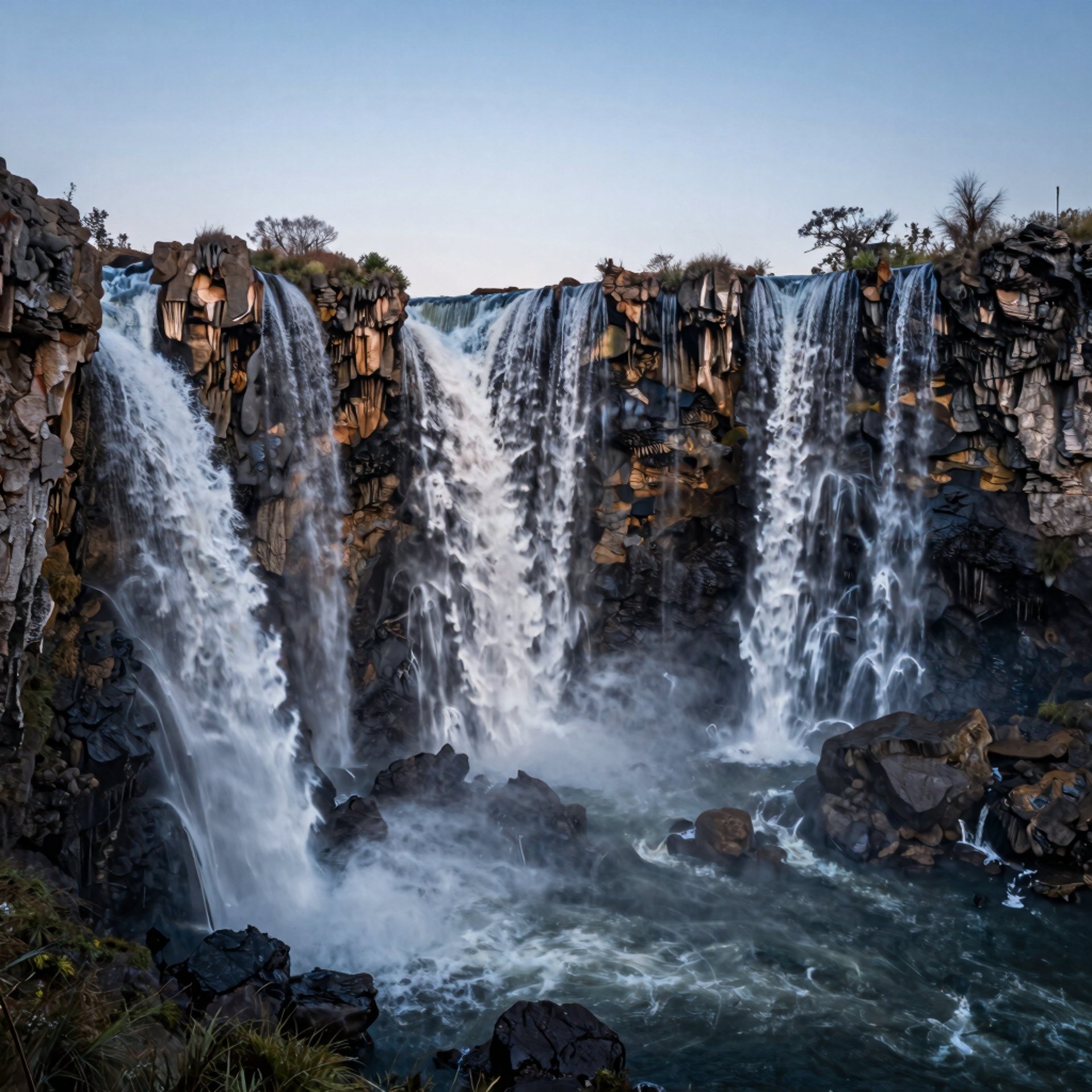
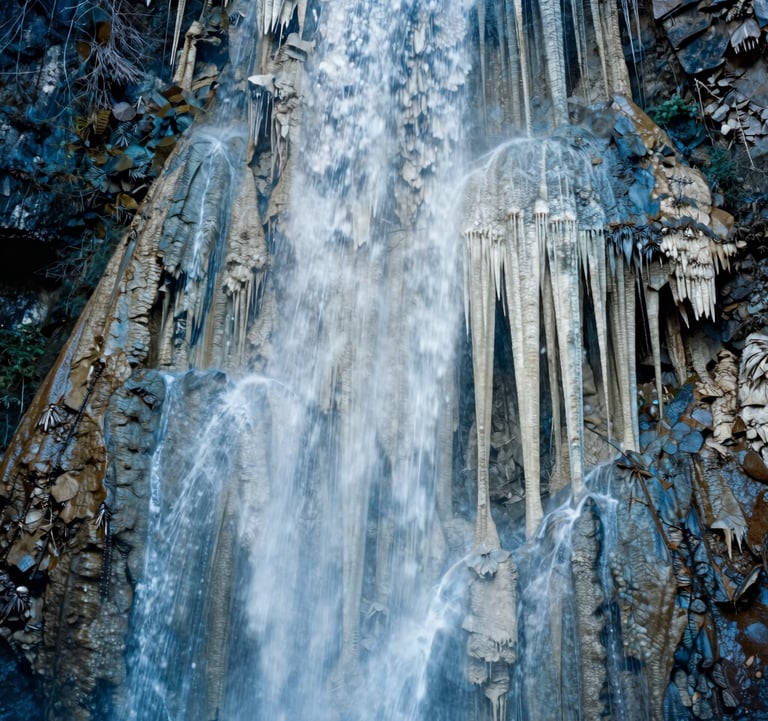
The stars of the show are the two massive "frozen" waterfalls: Cascada Chica (The Small Waterfall) and Cascada Grande (The Large Waterfall).
Cascada Chica (The Amphitheater)
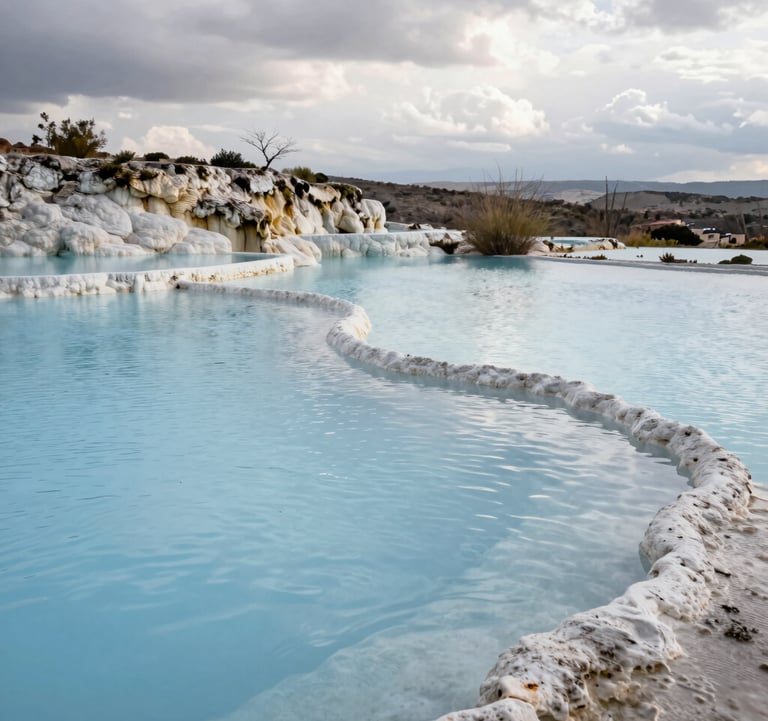
This is where the famous infinity pools are located. It’s a wide, sloping shelf about 50 meters high.
What to look for: Look closely at the "flow" lines in the rock. These are travertine deposits. Much like how stalactites form in a cave, the water trickles over the edge, evaporates, and leaves behind a microscopic layer of stone.
The Colors: The brilliant white comes from pure calcium carbonate. Notice the streaks of yellow or rusty orange? That’s the iron and sulfur "painting" the rock as the water flows.
Cascada Grande
Located just to the south, this formation is even more dramatic, plunging 90 meters into the valley.
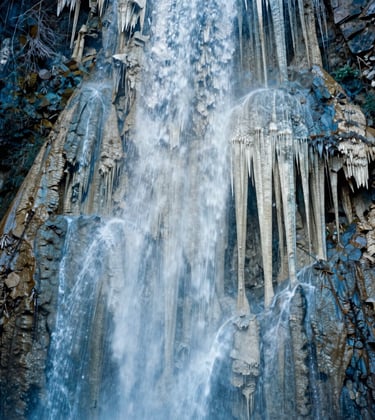
The Best View: Don't just look at it from the top. There is a trail that leads to a viewpoint directly opposite Cascada Grande. From here, you can see the "curtains" of stone that look like they were flash-frozen mid-descent.
Ancient Engineering: The Zapotec Canals
One detail most tourists walk right over is the ancient Zapotec irrigation system. Dating back over 2,500 years, these are some of the only surviving examples of pre-Hispanic terraced irrigation in Mexico.
Journalist’s Note: Look for the narrow, hand-carved grooves in the rock near the springs. These aren't natural. The Zapotec people used the mineral water to irrigate crops on the steep hillsides, proving that Hierve El Agua was as much a feat of engineering as it was a sacred site.
Exploring the Formations: A Hiker's Itinerary
To truly see the rock formations, you have to leave the pools. In 2026, the trails are well-marked but remain rugged.
The Loop Trail (1.7 miles): This trail takes you from the pools down into the canyon and back up past the base of the falls.
The Descent: As you hike down, the smell of the dry thorn scrub—a mix of wild oregano and dust—is intoxicating.
The Perspective Shift: Standing at the base of the 90-meter Cascada Grande makes you realize that these "rocks" are actually living, growing organisms. The "waterfall" is still expanding, one millimeter at a time.
FAQ: Rock, Springs, and Safety
1. Is the water in the pools natural? The springs are natural, but the two largest pools were man-made in the early 2000s to give visitors a place to soak while protecting the more fragile natural "pocket" pools.
2. Why is the water turquoise? It’s a mix of mineral reflection and the white calcium carbonate floor acting as a natural mirror for the Oaxacan sky.
3. Can I touch the formations? You can walk on the main surfaces, but avoid breaking off pieces or using soaps/oils in the water. The oils from human skin can actually "seal" the rock and stop the mineral deposition process.
4. Are the rocks slippery? Incredibly so. The wet travertine has the grip of a wet bar of soap. I highly recommend wearing water shoes with rubber grips.
5. How fast do the waterfalls "grow"? It’s an agonizingly slow process—roughly the thickness of a fingernail every few years.
6. Can I drink the spring water? No. The high mineral and sulfur content will likely cause significant stomach upset.
7. Is there a smell? Occasionally, you might catch a whiff of sulfur (like boiled eggs) near the bubbling vents, but it’s usually faint and masked by the mountain breeze.
8. Are the "bubbles" dangerous? No, it’s just carbon dioxide. It’s essentially natural sparkling water.
9. What happens to the formations in the rain? The rain actually helps! It washes away dust and brings new minerals down the face of the cliff, keeping the "waterfalls" looking bright white.
10. Is the trail to the bottom difficult? It’s a moderate hike. It’s steep and can be hot, so do it before 11:00 AM.
11. Are there fossils in the rock? You won't find dinosaurs, but you can often see "encrusted" leaves or twigs that have been petrified by the mineral water.
12. What is the best light for photography? Golden hour (the hour before sunset) turns the white rock into a glowing pink and orange canvas.
13. Are the natural pools deep? Most are shallow (knee-deep), while the man-made infinity pools are about chest-deep.
14. Does the water flow year-round? Yes, though it slows down during the peak dry season (March–May).
15. Can I see the Zapotec canals without a guide? Yes, they are near the "boiling" vents at the top, but a local guide can help you distinguish them from natural cracks.
Discover the Magic of the Sierra Norte
Hierve El Agua is a reminder that nature is the world's most patient sculptor. Whether you're there for the "gram" or the geology, take a second to put your hand on the cool, white stone and feel the history of the earth beneath your fingers.
HIERVE EL AGUA
© HierveElAgua.org - 2026.
This website is an independent guide created by nature enthusiasts and local Oaxaca experts. Please note that this is not the official website by the Oaxaca Municipality. Our mission is to provide high-quality information, historical context, and logistical support for visitors visiting Hierve El Agua nature wonder.
We take pride in only recommending and selling 100% official and authorized tickets sourced through licensed primary and secondary providers. By booking through our links, you ensure a valid, easy entry into the site. To support our local research and the maintenance of this guide, we may earn a small affiliate commission from your purchase.